Remote selling and customer relations: the next big step is seeing
Mail order, phone, e-commerce, AI: a look back at how remote customer relations evolved, and at the link that is still missing, vision inside the call.

Selling and advising remotely has never been easier. In one click, a company reaches a customer on the other side of the country. Yet as soon as a decision gets complex, a big purchase, a contract, a technical problem, distance becomes a wall again. We describe, we send a document, we hope. Just like thirty years ago.
To understand where remote customer relations are heading, you first have to look at where they come from. For a century, every major step removed a friction. The next one is arriving now.
A long history of selling from a distance
Mail order. It all starts with the paper catalogue. For the first time, you buy without travelling. It is huge progress, but the customer chooses from a picture, with no advice at all. They order, then they wait, often in doubt.
The phone and call centres. The voice brings people closer. You can finally talk to someone, ask a question, be reassured. Modern customer relations are born here. But this channel has a blind spot from day one: the advisor sees nothing, and neither does the customer. Everything rests on words.
The internet and e-commerce. The big shift. You see the product in photos and video, you compare, you buy at any hour. Remote selling changes scale. In France it is now worth close to 200 billion euros, around 12% of retail (Fevad, 2025). The market is mature: people buy more often, faster, from their sofa.
Mobile. The last jump. Everything, right now, in your pocket. Instant becomes the norm. Nobody wants to wait, travel, or call back later.
At every step a constraint disappeared: travel, then human distance, then waiting. Except on one channel, oddly frozen in time: the phone call. We still talk exactly like in 1980. Blind.
The paradox of remote selling: you see everything, except on the phone
E-commerce taught us to see everything before buying. But it has a clear limit: self service stops where the hard decision begins.
Choosing a kitchen, a sofa, a mortgage, an insurance policy: these are committing, subjective, sometimes technical choices. For those, a website is no longer enough. Two options remain. Travel to a store or a branch. Or pick up the phone.
And that is exactly where remote selling falls back into its blind spot. The salesperson describes a product the customer cannot see. The bank advisor explains figures the customer cannot picture. We send a PDF brochure, and cross our fingers.
This blind spot is so old that almost no one has ever measured it. For decades, showing during the call simply was not an option.
What customers want today: instant, without giving up advice
Two deep trends are converging. On one side, people travel less and less: footfall in stores and branches is falling, everyone wants to handle things from their phone. On the other, for decisions that matter, people still want real advice, not a form.
That is the tension in modern customer relations. E-commerce solved instant buying. It did not solve instant advice.
Today, if you want a slightly expert opinion, you still have to choose: quality of advice (by travelling) or immediacy (through a call where nothing is shown to you). Few people still accept that trade off. And when the experience falls short, they go elsewhere.
So the real promise of tomorrow is not buying even faster online. It is getting, over the phone, the same advice as in store. Better, because it is immediate.
The missing link: seeing changes the decision
Our conviction fits in one sentence: you only decide well when you can see.
In store, you see, you picture yourself, you decide. On the phone, you imagine. And when you imagine, you doubt, you ask for time to think, you postpone. The missing move is not to speak better. It is to show.
This is not a hunch, it is what we have measured for years, across three successive fields:
In emergency care. One SMS, one link, and the emergency physician sees the scene instead of guessing it. In 8 cases out of 10, what they see changes the diagnosis. One emergency service out of three in France, Switzerland and the United States now relies on it.
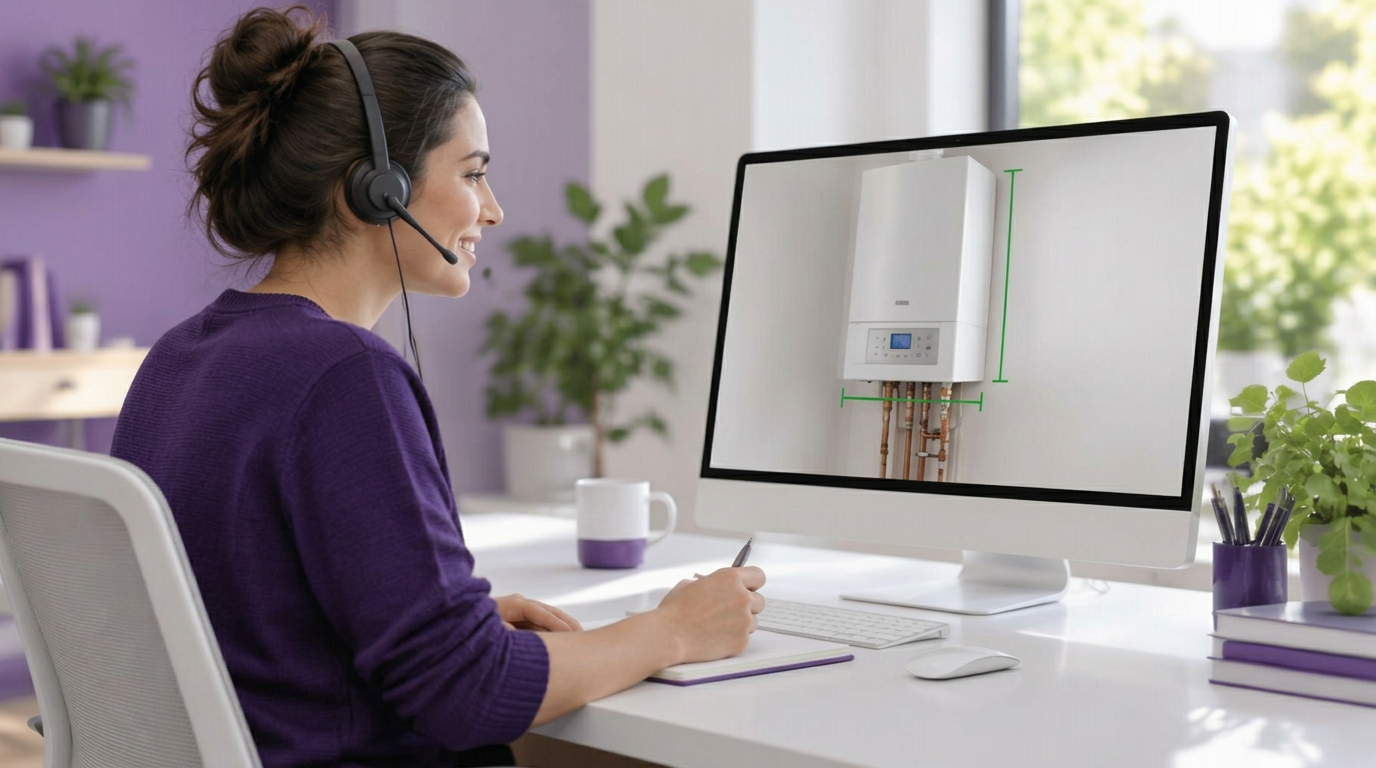
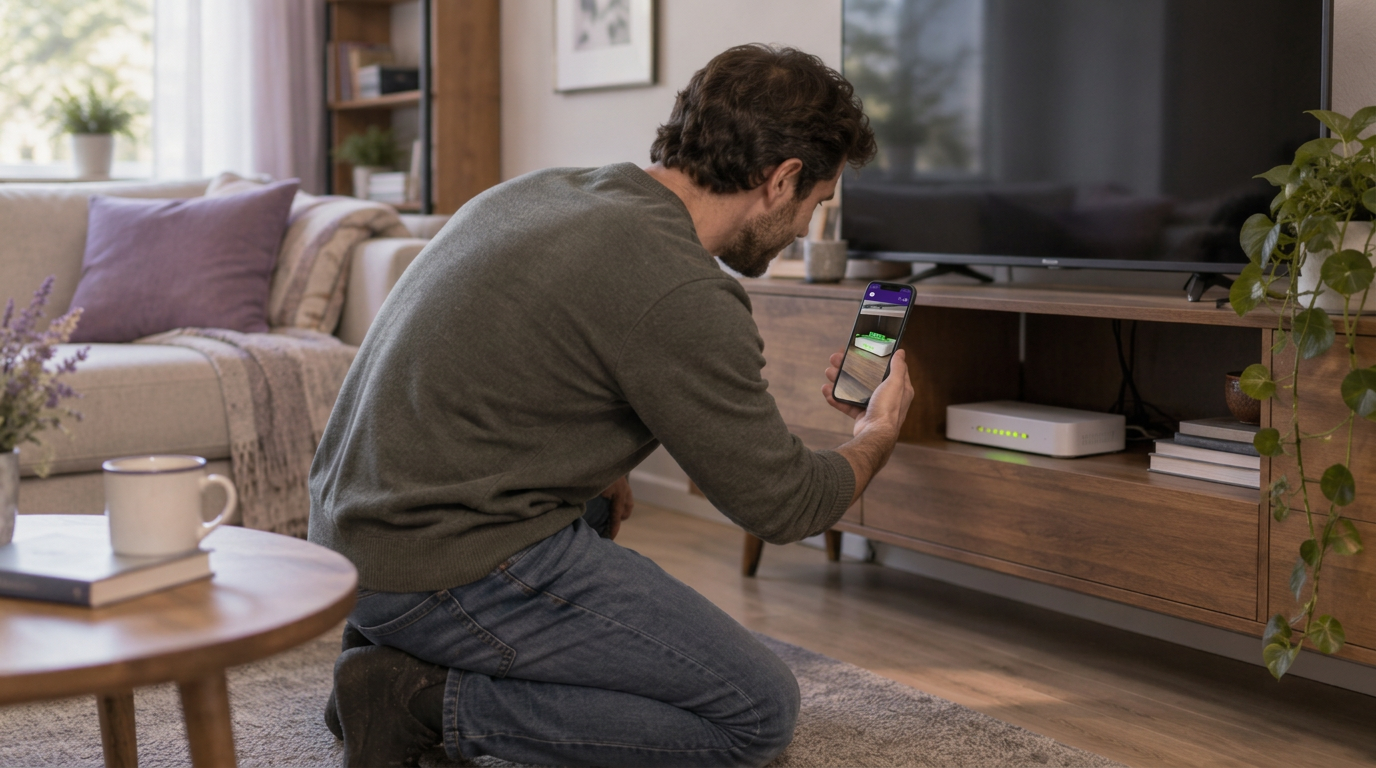
In support. The customer shows the fault, the advisor fixes it remotely. Result: 8 out of 10 on site visits avoided.
In sales. The prospect sees the product, the offer, the simulation, during the call. On the campaigns run so far, seeing closes the deal 9 times out of 10. And teams that show sell up to four times more than teams that only describe.
The same move, everywhere: show instead of describe. One SMS, one click, a connection in under ten seconds, with no download and no installation.
And now AI: but an AI that cannot see hits a ceiling
The next big chapter of customer relations is being written with artificial intelligence. Adoption is massive: in two years, the share of companies using AI agents for customer relations went from 10% to 85% (McKinsey, 2025). According to Gartner, by 2028 three out of four new contact centres will include a generative AI agent. The reason is simple: the contact centre is a cost centre, and everyone is looking to automate low value requests.
But there is a ceiling. Experts agree: AI excels at routine requests, and quickly shows its limits on complex or sensitive cases, where human judgment remains essential. Why? Because on the phone, a voice AI is blind. It tries to understand a fault, a product, a situation, from words alone. And people do not always have the right words.
Worse: a voice AI often prefers to invent an answer rather than admit it does not know. It fills the gaps with confidence, and gets it wrong. The customer hangs up with a wrong answer, convinced it is right. Satisfaction collapses.
Our conviction is the same as for humans: you have to let it see. An AI that sees no longer guesses from words, it reasons on what is in front of it. It relies on reality, and it knows how to recognise its limits. That is what should let it absorb simple requests, continuously, while leaving humans the time for what really matters, always with the option to hand over to an advisor.
What we believe in: a world where every call is visual
Let us pick up the thread. Mail order removed the travel. The phone brought humans closer. The internet put the product in front of our eyes. Mobile brought the instant.
The next friction to remove is the blindness of the phone. Making every call visual, from support to sales, from humans to AI.
We are convinced of it: in a few years, deciding without seeing, whether buying, being advised or being fixed, will look as absurd as driving with your eyes closed. The channel already exists, the call. All it was missing was an image.
Because seeing on the phone changes the decision.