BPO and Video Assistance: Why Contact Centers That Only Talk Will Lose Their Clients
The next competitive advantage for BPOs won't come from talking better, but from showing. An analysis of a strategic repositioning in 2026.

The BPO customer relations market is at a tipping point. Conversational AI is advancing at a breakneck pace, clients are demanding measurable results, and cost pressure has never been higher. In this context, a question arises: is "talking better" still enough to win tenders?
Our conviction at Vizalia: the next competitive advantage for BPOs won't come from talking better. It will come from showing.
BPO in 2026: A Market in Full Transformation
The Business Process Outsourcing sector has changed profoundly in recent years. The era of pure cost cutting is over. Clients are no longer simply looking for a provider cheaper than their in house team. They want a partner capable of demonstrating a direct impact on their business KPIs: retention rate, conversion, customer satisfaction, First Call Resolution.
At the same time, generative AI is reshuffling the deck. Chatbots and voicebots are handling an ever growing share of simple interactions : qualification, drafting, order tracking, FAQs. The result is that human agents are repositioning themselves on complex cases, emotional situations, and moments of truth.
For BPOs, this creates a dual challenge. On one side, the repetitive tasks that formed the core of their business are being automated. On the other, the remaining interactions are more demanding, more technical, and require genuine resolution capability.
In this context, differentiating solely on price or seat volume is no longer viable. Providers that fail to move upmarket, that bring no technological or domain added value, are doomed to be replaced : by AI itself, or by a competitor that has evolved.
The Phone Paradox: A Critical Channel, but a Blind One
Despite the proliferation of digital channels, the telephone remains the cornerstone of customer relations. Studies confirm this year after year: customers who call are often those with the most urgent, most complex, or most frustrating problem. These are the highest value interactions : the ones where everything is at stake.
Yet the phone has a structural limitation that everyone knows but no one solves: you can't see anything.
The customer tries to describe their broken boiler. The agent tries to understand which model it is. The customer says "the red light at the top right," the agent asks "the flashing one or the solid one?" And it drags on. And it costs money. And sometimes it doesn't get resolved on the first call.
This problem is found in every sector: energy, telecom, insurance, home improvement, healthcare. Each time the pattern is the same. The customer knows what they see, but can't describe it. The agent knows how to ask questions, but can't see. And between the two, there is a gap that generates unnecessary AHT, callbacks, technician dispatches, and dissatisfaction.
For BPOs, this gap is a major business problem. Every extra minute of AHT costs money. Every callback is a first contact resolution failure. Every avoidable dispatch is a burden on the client's profitability : and therefore on the commercial relationship with the BPO.
Video Assistance: Turning the Call Center into a Resolution Center
The solution exists, and it is simpler than you might think. Instead of asking the customer to describe what they see, you ask them to show it.
That is the principle of video assistance. During the call, the agent sends a link by SMS to the customer. The customer clicks, and with a fast connection, their camera is shared with the agent. No app to download. No account to create. No friction.
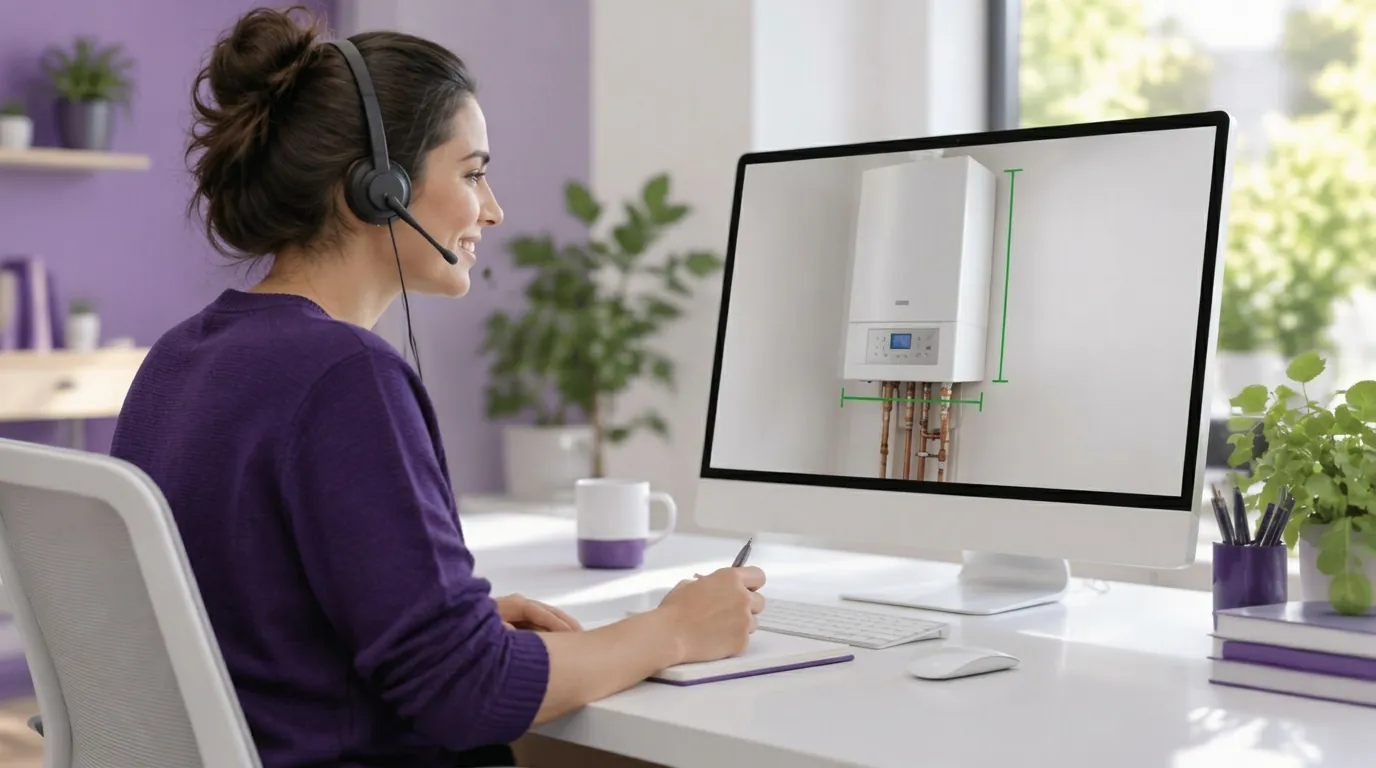
The agent then sees exactly what the customer sees. They can take HD photos, annotate the screen to guide the customer, scan a document or serial number, and even pinpoint a specific element using augmented reality tools.
The change is radical. We move from a blind conversation to a real time visual diagnosis. The agent is no longer guessing: they see. They are no longer describing a procedure and hoping the customer understands: they show it, directly on the customer's screen.
The Results Speak for Themselves
Companies that have integrated video assistance into their customer relations journeys see immediate, measurable results:
80% of on site visits avoided: in the majority of cases, remote visual diagnosis is sufficient to resolve the problem or confirm that a dispatch is necessary : with the right part, first time.
70% First Call Resolution (FCR): when the agent sees the problem, they resolve it. On the first call. No callback, no transfer, no escalation.
Zero impact on AHT: contrary to what one might expect, video does not lengthen the call. It makes it more efficient. The back and forth descriptions disappear, and time is used to resolve, not to understand.
Fast connection: the customer clicks on an SMS link, the video launches. No download, no password, no friction.
Concrete Use Cases, Across All Sectors
Video assistance is not reserved for a specific sector. It applies wherever a customer needs to show something to an agent:
Energy and heating: remote fault diagnosis, installation verification before dispatch, model and serial number identification.
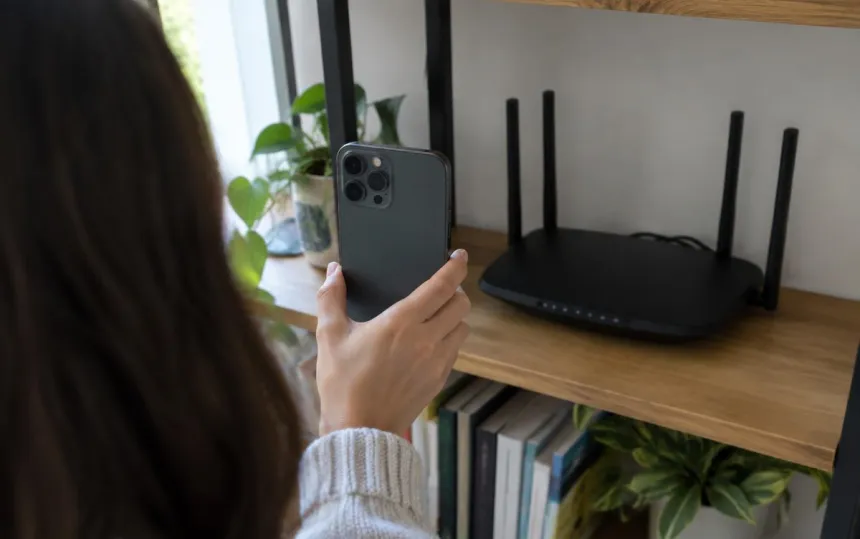
Telecom: step by step guidance for router or equipment setup, connectivity diagnosis, cable verification.
Insurance: real time claims assessment, photo and video evidence collection, accelerated reimbursement process.
Home improvement: visual advice for a renovation project, leak or fault diagnosis, assembly guidance.
Home healthcare: verification of medical device installation, patient assistance, strengthened link with care teams.
In each of these cases, the BPO that offers video assistance to its client brings value that its "voice only" competitors cannot provide.
AI and Video: The Combination BPOs Haven't Seen Coming Yet
Video assistance alone is already a powerful lever. But when combined with artificial intelligence, it takes things to another level.
Remote AI Measurement
During a live video call, AI can now measure the dimensions of an object, a window, or an entire room remotely : directly through the customer's smartphone camera. With a margin of error below 2%.
For a tradesperson quoting a job, an insurer assessing a claim, or an after sales technician checking the feasibility of a replacement, this is a considerable time saver. No need to send someone out just to take measurements. The quote is done live, during the call.
The MCP: Connecting Conversational AI to Video Assistance
At Vizalia, we have just launched our MCP - Model Context Protocol. Behind this technical term lies a simple idea: allowing any conversational AI, whether open source or proprietary, to trigger a Vizalia video call and retrieve photos remotely.
Concretely, this means that your contact center's voice AI will be able, mid conversation with a customer, to automatically trigger a video session, capture images, analyze them, and continue the resolution : without human intervention, or by handing off to an agent if needed.
The MCP is not an AI you install. It is a tool template you add. If tomorrow the BPO changes its AI model, it keeps the MCP. No technology dependency. No lock in.
The Virtual Showroom: When Phone Sales Become Immersive
Beyond diagnosis, video also opens up unprecedented commercial opportunities. With the virtual showroom, an agent can give the customer an immersive sales experience, remotely, during a phone call.
The principle: as the agent speaks, the right visuals appear on the customer's screen. The agent mentions a car? The car appears. They mention a green color? The model appears in green. The customer is immersed in the brand's world as if they were in a physical store : but from their sofa.
For BPOs managing remote sales campaigns, this is a game changer. We move from "old school" phone sales, where you try to convince with words, to a visual and interactive experience that drives conversion rates through the roof.
What This Concretely Changes for a BPO
Integrating video assistance into your offering is not a gimmick. It is a strategic repositioning. Here is what it concretely changes for a BPO provider.
On Operational KPIs
FCR increases significantly when the agent sees the problem rather than imagining it. Technician dispatches decrease : each successful remote diagnosis represents a direct saving for the client. AHT does not deteriorate, because the time saved on comprehension more than offsets the seconds needed to launch the video session. And NPS improves, because a customer who is understood and helped first time is a satisfied customer.
On Commercial Differentiation
In a tender, all BPOs offer trained agents, telephony tools, and SLA driven management. Video assistance creates a gap. The provider that can say "our agents see what your customer sees, in real time, without friction" has an argument that competitors cannot replicate without investment.
This is all the more true given that clients are increasingly sensitive to their providers' technological capability. They want to know how AI is deployed concretely, with what measurable impact on their KPIs. Video assistance delivers hard numbers, from the very first call.
On the Relationship with Clients
A BPO that reduces its client's technician dispatches is not just handling calls. It is directly contributing to the operational and financial performance of its customer. It becomes a strategic partner, not an interchangeable supplier.
And when that same BPO can offer remote AI measurement, certified electronic signature, or the virtual showroom for commercial campaigns, it moves even higher up the value chain.
On Agent Retention
This is rarely discussed, but video assistance also has a positive effect on teams. Agents who can see the customer's problem feel more competent and more effective. The situations of mutual frustration : where the customer gets angry because they can't make themselves understood, and the agent exhausts themselves asking questions : disappear.
This is not a minor point in a sector where agent turnover is a structural problem. Giving agents better tools also means keeping them longer.
Why BPOs Must Act Now
The market is not waiting. Conversational AI improves every month. Clients are hardening their requirements. BPOs that operate purely on voice are increasingly exposed to commoditization.
Conversely, those that integrate the visual dimension into their offering position themselves in a high value niche, difficult to replicate, and directly correlated to the KPIs their clients measure.
Video assistance is not a technology of the future. It is deployed today at major customer relations players : large enterprises and BPOs alike. The results are documented, measurable, and reproducible.
The question is no longer "does it work?" The question is "how long can you afford not to offer it?"
You are a BPO and want to explore what video assistance can bring to your operations? Contact us for a personalized demo. Operational deployment in 48 hours, no client side installation required.
Vizalia is the professional video assistance solution designed for large enterprises and contact centers. No download, no friction. ISO 27001 certified.
Read also: The 6 common mistakes to avoid when using video in customer service.
Read also: 5 essential KPIs to boost your customer service performance.