Remote claims assessment: assessing water damage by video, from the very first call
Remote claims assessment: use video and 3D to document water damage at first notice of loss, with measurements and photos in the file.
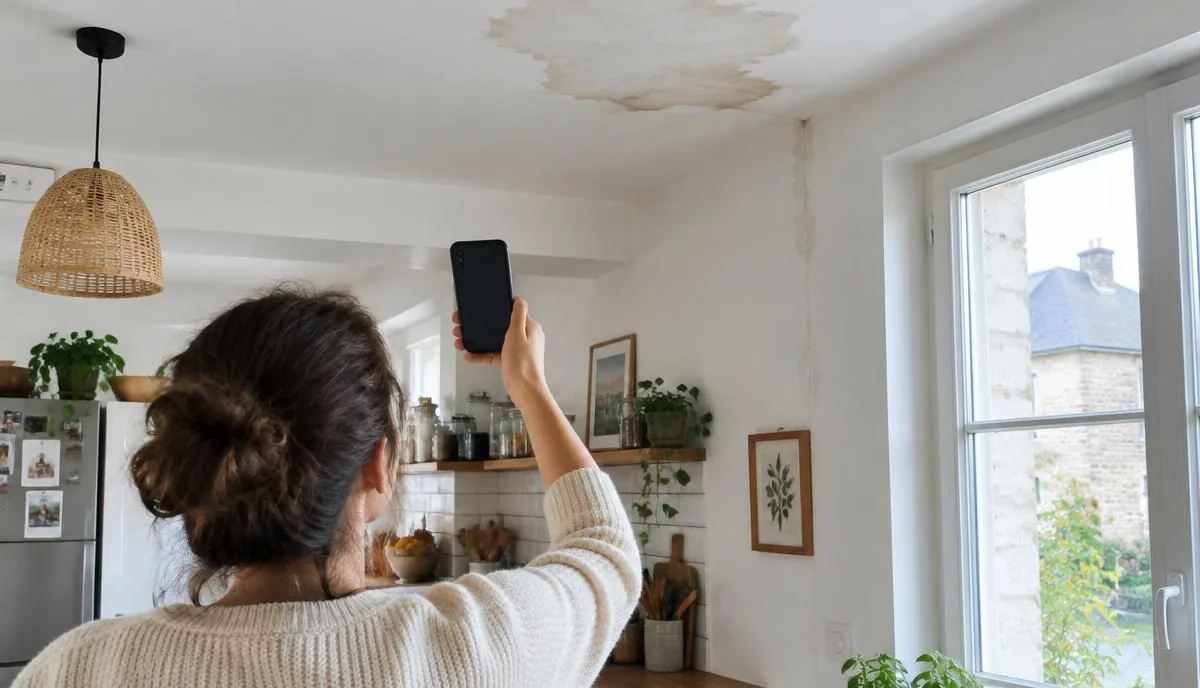
On a Tuesday evening, a stain appears on the kitchen ceiling. The next morning, your policyholder calls to report the claim. Over the phone, they describe what they see in their own words: “a big water mark”, “it's run down the wall”, “I'd say a metre, maybe more”.
The claims handler notes what they can. To estimate the cost, they will have to wait: a loss adjuster or tradesperson needs to visit, an appointment must be arranged, and photos arrive by email, often blurred, without scale, and sometimes incomplete. Meanwhile, the claim makes no progress. And the policyholder waits.
What is missing isn't goodwill: it's the image. In this new instalment of our series “How seeing on the phone changes…”, we look at what video changes for remote claims assessment, particularly for water damage.
Why water damage lends itself to remote assessment
Water damage is one of the most common home insurance claims, and often one of the simplest to document:
- the damage to assess is visible: a ceiling stain, run-off down a wall, blistering paint, peeling wallpaper, swollen skirting boards or flooring;
- the cost depends on areas and dimensions: square metres of paint or ceiling, lengths of skirting, ceiling height. In other words, you need to measure;
- the claim value is often modest: a loss adjuster's visit weighs heavily against the value of the claim;
- the policyholder is on site, with a smartphone in their pocket.
Everything is in place for the assessment to happen during the call. On one condition: the claims handler must actually see the room and be able to measure it.
The limits of reporting a claim by phone and sending photos
Today, reporting a home insurance claim usually relies on the policyholder's description, supplemented by a few photos. That's better than nothing, but:
- the description is subjective: “a big stain” says nothing about its actual size;
- a photo has no scale: you can't tell whether the water mark is 40 cm or 1.50 m across;
- there is always an angle missing: the adjacent wall, the whole ceiling, the apparent source of the leak. Hence the back-and-forth emails;
- nothing guarantees the date or location of the photo;
- everything has to be re-keyed into the claim file.
The result: when in doubt, someone is sent on site “to assess it”. A trip that mostly serves to see and measure.
Assessing water damage by video, step by step
With Vizalia's 3D Space for claims, reporting a home insurance claim by video becomes a complete assessment, from the very first call:
- The claims handler sends a link to the policyholder during the call. The policyholder opens it on their phone: nothing to install.
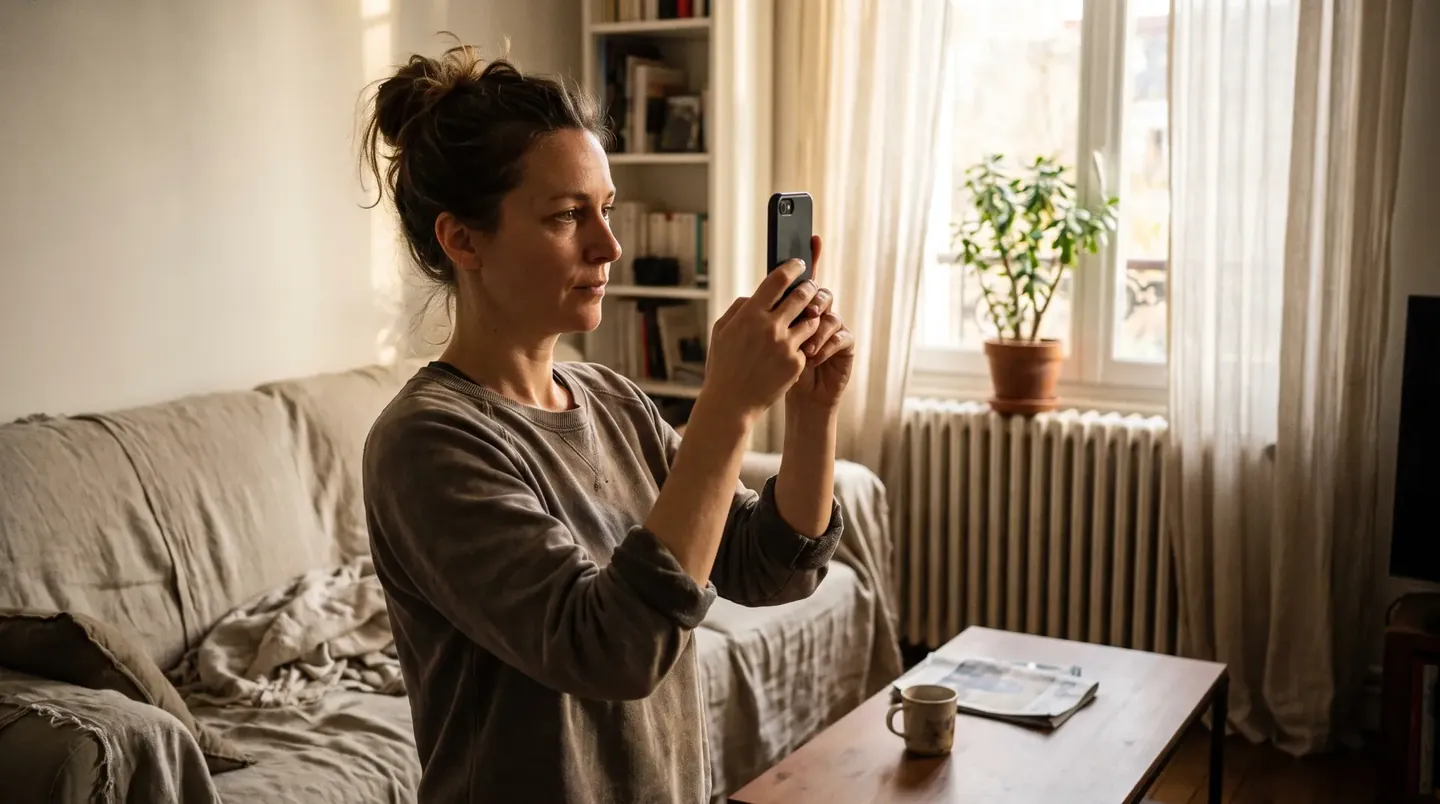
- The policyholder films the room. Filmed areas turn green on screen: they instantly see what is left to film.
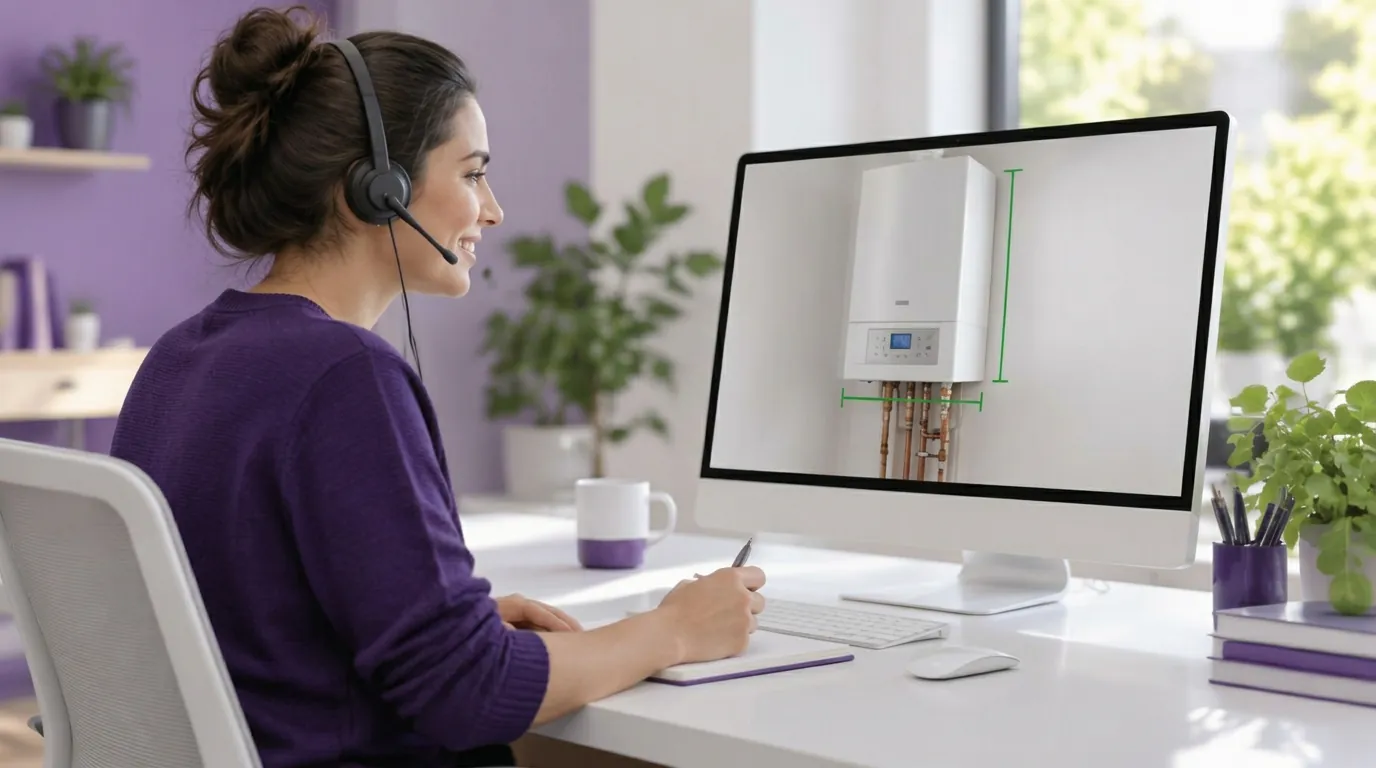
- The claims handler watches the room build in 3D, live. A few minutes later, the claim's 3D space is ready.
- They measure in one click, without travelling: the area of the stain, the height of the run-off, the dimensions of the wall or ceiling. Scale is checked to ± 2%.
- Everything goes to the file, with no re-keying: the 3D space, measurements, every time-stamped and geotagged photo, a PDF report and the call timeline. The data is also available via API for your claims management system.
The claim is documented from the very first call. Discover 3D Space for claims
From photos to measurements: what 3D changes for assessment
A photo shows. A 3D space measures.
That's the whole difference between a file where you know “there is damage” and a file where you know that 6 m² of ceiling and 4 metres of skirting need to be repaired. The quote is based on dimensions, not a guess.
And the 3D space stays in the file: the loss adjuster or tradesperson taking over the claim sees the room as it was on the day of the call, from every angle. Everyone works from the same basis, without calling the policyholder back for “one last photo”.
For more on remote measurement, read our article on remote measurement.
What video does not replace
Remote assessment does not solve everything, and that is as it should be:
- leak detection: if the source of the water has not been identified, a professional will need to attend. Video can, however, help qualify the request and send the right person;
- hidden moisture, behind a partition or beneath a covering, cannot be seen on camera;
- major or disputed claims still warrant an on-site assessment. Video helps identify them as soon as the claim is reported;
- the decision remains with the claims handler or loss adjuster. Video simply gives them what they need to decide, sooner.
The aim isn't to eliminate every visit, but to reserve the remaining ones for claims that justify them.
Example: Qualisin, 7 minutes instead of hours on the road
Qualisin is a network of independent companies specialising in post-claim repairs (water damage, fires and natural disasters): painting, plastering, plumbing and leak detection. Its technicians used to spend considerable time travelling for simple quotes.
With Vizalia, they now quote for straightforward claims by video:
- 7 minutes: the average session length;
- 24 hours: the turnaround for sending quotes;
- 100% satisfaction during testing.
“For straightforward claims, we've gone from several hours travelling in traffic to a seven-minute conversation. For our teams, it's a real gain in time and quality of life.” — Ophélie Rolland, network coordinator at Qualisin
What everyone gains
- The policyholder doesn't wait for an appointment before their claim moves forward. They film their room in a few minutes, guided on screen.
- The claims handler has a complete file from the very first call: images, measurements and timeline.
- The loss adjuster and tradesperson travel only when it is useful, with a clear view of what awaits them.
- The company cuts travel, and therefore emissions. We cover this in our article on video assistance and CSR.
Setting up remote claims assessment: where to start
- Define a scope. Start with home water damage claims, below a value you set.
- Offer video as soon as the claim is reported. The first call is when the policyholder is most available and the image has the greatest value.
- Write a short filming protocol: the whole room, the damaged area and the apparent source of the water.
- Connect video to your management system so the 3D space, measurements and photos reach the claim file without re-keying.
- Measure from the first month: time from reporting to quoting, share of claims handled without a visit, number of exchanges with the policyholder and satisfaction.