Home healthcare providers: how to prove follow-up carried out remotely
The HAS proposes that patient follow-up should go remote. How a home healthcare provider proves every appointment, without travelling.
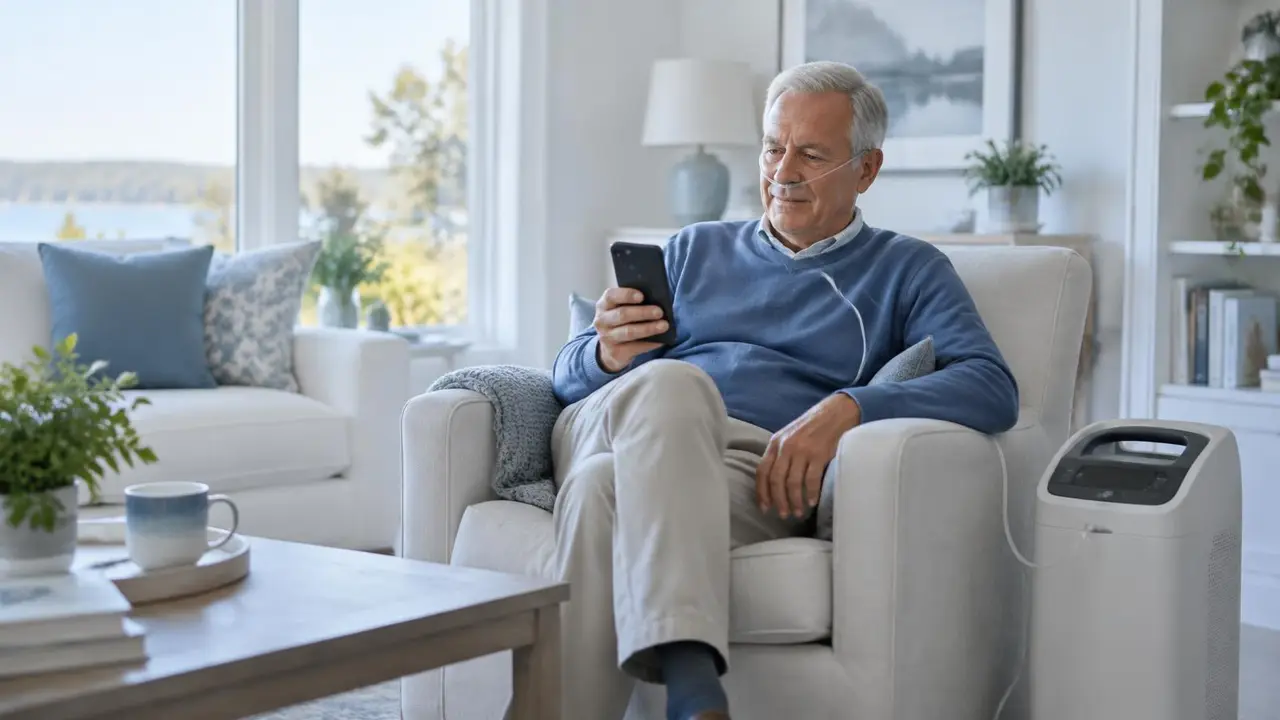
Home patient follow-up is changing shape. For sleep apnoea, France's Haute Autorité de santé (HAS, the national health authority) proposes that follow-up appointments should now take place remotely, and at home only when there is a difficulty. For a home healthcare provider, that means less driving and more patients followed. But one question comes up quickly: when the appointment does not take place at the patient's home, how do you prove that it did take place, and what was done?
Follow-up goes remote: what the HAS says
In March 2026, the HAS published its opinion on the coverage of continuous positive airway pressure (CPAP) and the associated services. In it, the HAS redesigns patient follow-up:
- the installation visit remains at home, where the patient lives;
- follow-up appointments are carried out remotely: a first appointment within the first four months, then an annual appointment for adults;
- a home visit remains possible when a difficulty is identified or remote means are not enough;
- the provider sends a follow-up report to the prescribing doctor;
- remotely transmitted data must be available for consultation by the medical service of the French national health insurance (Assurance maladie).
This opinion has not yet been turned into a ministerial order: for CPAP, the rules in force remain those of the order of 13 December 2017. But the direction is clear, and it does not only concern sleep apnoea. Remote follow-up is becoming the norm, travel the exception.
Remotely, a visit leaves few traces
At the patient's home, a visit can be seen: a vehicle, a time, a signed sheet, sometimes a paper report. Remotely, these markers disappear.
- A phone call leaves only a line in a call log: nothing about what was checked.
- A consumer video call app keeps no dated photo, no file, no patient agreement.
- Photos sent by email or messaging arrive with no reliable date, no location, often after the fact, and get lost in inboxes.
The day a follow-up has to be justified (a dispute with a patient, a question from a doctor, an audit), the provider often has only their word and a few notes.
What solid proof of follow-up must contain
Useful proof answers six questions, with no re-keying:
- When? The exact date and time of each step.
- Where? The patient's location at the time of the exchange.
- What was seen? Photos of the device, the mask, the settings, taken during the exchange.
- What was done? The history of the exchange: advice given, settings checked, problem solved or intervention planned.
- Does the patient agree? Their signature, which validates what was observed and done together. The HAS also points out that collecting patient data and remote monitoring require signed and documented consent.
- Who guarantees it? An independent third party who certifies and keeps the file, so that it cannot be challenged.
How Vizalia does it, during the call
Follow-up happens during a simple call, with no app.
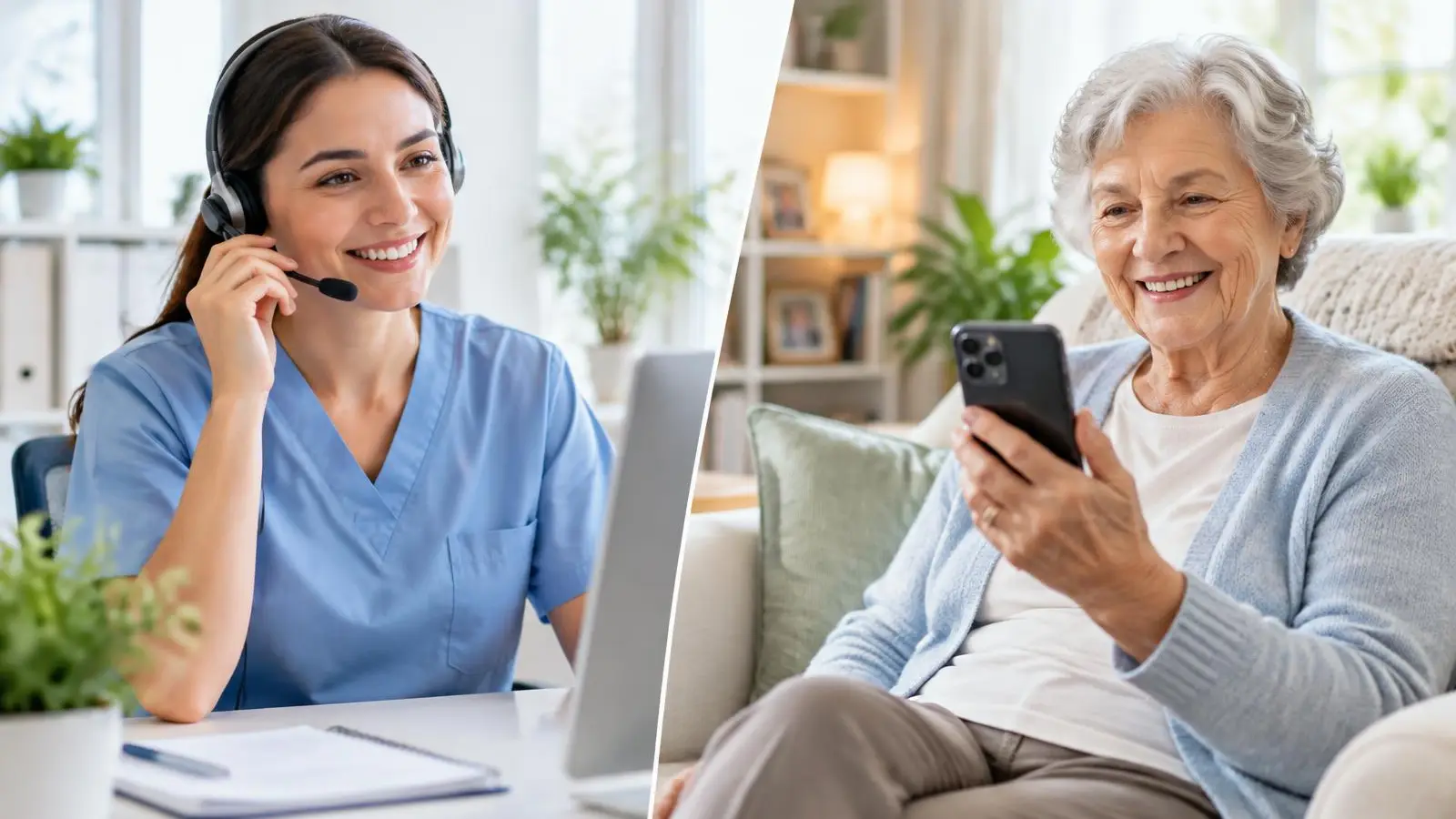
- The advisor or nurse calls the patient, as usual.
- A link by SMS: in one click, the patient opens their phone's camera in their browser. Nothing to install, no account to create.
- The patient shows their CPAP device, their mask, their oxygen concentrator. The healthcare professional guides them and checks the settings, the condition of the equipment, that everything is correctly in place.
- Everything is recorded as the visual call goes on: time-stamped and geolocated photos, a time-stamped history of each step, from sending the link to the end of the exchange, and the patient's signature at the end of the appointment.
- A bailiff certifies and keeps the file. Each appointment carried out remotely has the value of a bailiff-certified report, without anyone having to travel.
The provider thus keeps proof of every follow-up visit: for the doctor, for the patient, and for the national health insurance if it asks for it.
Santé Cie, which supports 500,000 patients at home, uses Vizalia to strengthen the bond with its patients through instant visual advice. Read the case study.
Vital signs remotely, during the same call The healthcare professional can also offer a measurement of heart rate and respiratory rate through the camera: the patient stays still for 30 seconds, face towards the phone, and the result is sent to the healthcare professional. The result is not displayed to the patient, and the interpretation remains that of the healthcare professional. The measurement is performed by Saphere, from e-sensia, a class IIa medical device (CE 2460) for diagnostic support, under the supervision of a healthcare professional. Heart rate ± 5 bpm, respiratory rate ± 4 /min (instructions for use v21, 2025). Adults aged 18 to 80, in teleconsultation and home follow-up. Do not use in life-threatening emergencies. Read the instructions for use carefully. Vizalia integrates Saphere and is not itself a medical device. Continuous monitoring gives indicative estimates, outside the scope of the medical device, and does not replace the certified measurement.
What remote proof does not replace
- The installation visit, which remains at the patient's home.
- A home visit when it is needed: a patient in difficulty, equipment to replace, a doctor's request.
- The healthcare professional's judgement, who alone decides what happens next.
- The coverage rules: the proof documents the follow-up; it does not change the reimbursement conditions set by the LPPR (the French list of reimbursable products and services).
Frequently asked questions
Can follow-up of a CPAP patient be done remotely? Remote monitoring already exists under the current rules (order of 13 December 2017). In its March 2026 opinion, the HAS proposes going further: follow-up appointments would take place remotely, with the installation visit remaining at home. This opinion still has to be turned into an order.
Is a bailiff-certified report mandatory for remote follow-up? No, no regulation requires it. It is an extra safeguard: the file of each appointment is certified and kept by a bailiff, which makes it hard to challenge.
What information should be kept from each appointment? The date and time, the location, photos of the equipment, how the exchange went, the advice given, the planned next steps, and the patient's signed agreement.
Does the patient have to install an app? No. They receive an SMS, tap the link, and the camera opens in their browser.
Further reading
- Video assistance (visio-assistance) for home healthcare providers
- Telecare at home: following patients remotely, between two visits
- Every intervention, certified by a bailiff
Sources: HAS, opinion on CPAP medical devices and associated services in OSAHS, March 2026; order of 13 December 2017.
Want to see Vizalia in action? A 20-minute demo, on your own use cases. Request a demo →