Telesales and cold calling in France after 11 August 2026: sell better with fewer calls
Since 11 August 2026, calling a French consumer to sell requires their prior consent. Fewer calls are possible, so every call has to convert better. Here is how.

Since 11 August 2026, telesales in France no longer work the way they used to. Calling a consumer to sell them something now requires their consent before the call. Gone are the cold lists worked through in the hope that the contact is not registered on Bloctel.
For telesales teams, the consequence is simple: fewer numbers to call, so every call matters more. The question is no longer "how many calls can we make?" but "how many calls do we convert?".
What the cold-calling reform changes
The French anti-fraud law of 30 June 2025, completed by a decree in July 2026, reversed the logic of telephone canvassing of consumers:
- Before, you could call anyone except people registered on Bloctel (opt-out logic).
- Since 11 August 2026, you can only call people who have given their consent to be canvassed (prior opt-in). Bloctel is abolished.
Consent must be free, specific, clear and revocable at any time. It is up to the business to prove that it was obtained. Calls related to an ongoing contract remain possible, and some sectors, such as energy renovation, remain banned from cold calling in all cases. Administrative fines can reach €375,000 for a company, and a contract signed without consent can be cancelled.
This article is not legal advice. For the details of the rules, see the DGCCRF fact sheet (in French) or your legal advisor.
What it means in practice for telesales
The reform does not end telesales. It shifts it:
- Fewer cold outbound calls, and smaller lists made up of people who said yes.
- More calls with existing customers: renewals, upselling and cross-selling, within the ongoing contract.
- More inbound calls and requested callbacks: forms, online simulators, quote requests, scheduled callbacks.
- A higher cost per contact: every consent has to be earned, often through marketing campaigns.
As a result, a contact centre's performance is no longer measured by call volume but by conversion rate. And that is exactly where traditional telesales has a blind spot.
The blind spot of telesales: the customer sees nothing
Contact centres have professionalised everything: scripts, CRM, qualification, sales pitch. But the customer is still on the phone, seeing nothing. They have to imagine the product's colour, remember the monthly payments of a loan, understand an insurance cover described out loud.
When customers cannot picture the offer, they hesitate. And when they hesitate, they ask for time "to think it over", or for a brochure by email. We explain this in more detail in Selling over the phone in 2026: why describing is no longer enough.
With fewer calls possible, every "I'll think about it" costs much more than before.
The visual call: show the offer during the call
A visual call adds images to the phone conversation without replacing it:
- During the call, the advisor sends a link by text message.
- The customer taps it: the screen opens in their phone's browser, with no app to install and no account to create.
- The conversation goes on, and the advisor shows what they are talking about.
What the advisor can show:
- the product: the right colour, the right model, front and back;
- a simulator: monthly payments, total cost, plan comparison, calculated live;
- an infographic to explain a cover or a technical offer;
- the contract or order summary, before confirmation;
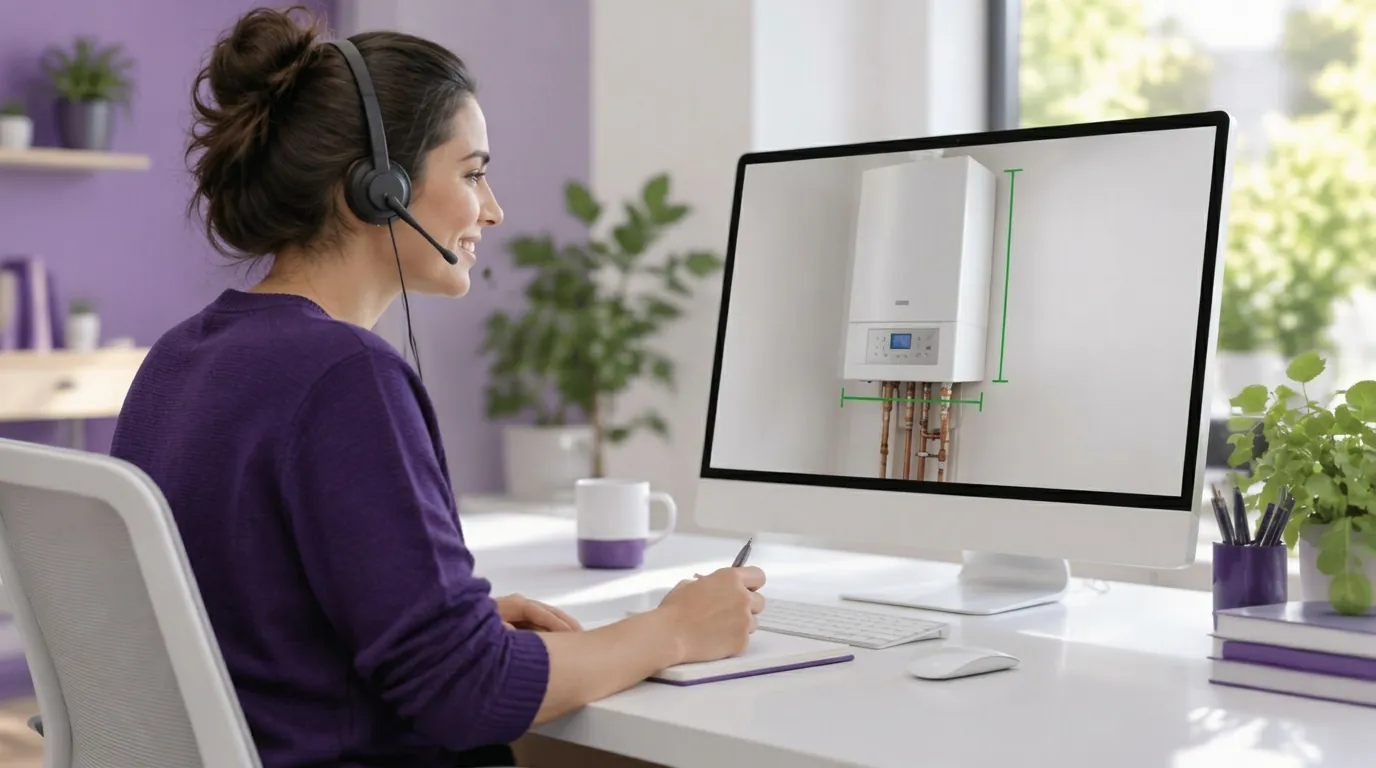
- the customer's room in 3D: they film it, the advisor takes measurements to within ±2% and quotes a kitchen, bathroom or wardrobe during the call. See 3D Scan Measurement.
The customer no longer imagines the offer: they see it, ask questions about what they see, and decide in the same conversation.
Measured results
- Conversion multiplied by 4 when the customer sees the offer: this is the result of an A/B test run on 10,000 calls.
- 98% of customers agree to open the link when the advisor offers it.
A few telesales examples:
- a consumer credit provider shows its simulator live to sell revolving credit (read the case study);
- an insurer shows its infographics to sell personal accident cover (read the case study);
- a bank sells payment terminals remotely with a cost simulator (read the case study).
A journey built on the customer's choice
The reform puts consent at the heart of the relationship. The visual call follows the same logic: the customer chooses to open the link, nothing appears without their tap. They see what the advisor shows them and stay in control of the conversation.
For businesses, security remains a prerequisite: Vizalia is ISO 27001 certified and hosts its data in France. Learn more about our security.
5 best practices for telesales after the reform
- Make every authorised call count. A contact who has given consent is rare: prepare what you will show them, not just what you will tell them.
- Focus on existing customers. Calls related to an ongoing contract remain possible: the ideal ground for upselling and cross-selling.
- Bring the calls to you. Online simulators, callback requests, appointment booking: every inbound call is an already interested customer.
- Show instead of describing. Product, simulation, cover, summary: what customers see, they understand and remember.
- Measure conversion, not volume. Track conversion rate per call, average basket and the share of "I'll think about it" that never call back.
Frequently asked questions
What is telesales? Telesales is selling products or services over the phone, through outbound calls (the advisor calls) or inbound calls (the customer calls). Cold calling (prospecting) is its first step: finding and qualifying new customers.
Does the reform ban telesales? No. It bans calling a consumer to sell to them without their consent. Calls with consent, inbound calls and calls related to an ongoing contract remain possible.
Does the reform apply to business-to-business prospecting? It targets consumer canvassing. B2B prospecting is governed by other rules: check your situation with your legal advisor.
Does the customer need to install an app for the visual call? No. They tap the link received by text message and the screen opens in their phone's browser.
Further reading
- Selling over the phone in 2026: why describing is no longer enough
- Remote selling and customer relations: the next big step is seeing
- Telesales with the visual call
Want to see Vizalia in action? A 20-minute demo on your use cases. Book a demo →