Telecare at home: following patients remotely, between two visits
Telecare lets home healthcare providers and nurses follow their patients between two visits. Provided they can see them.
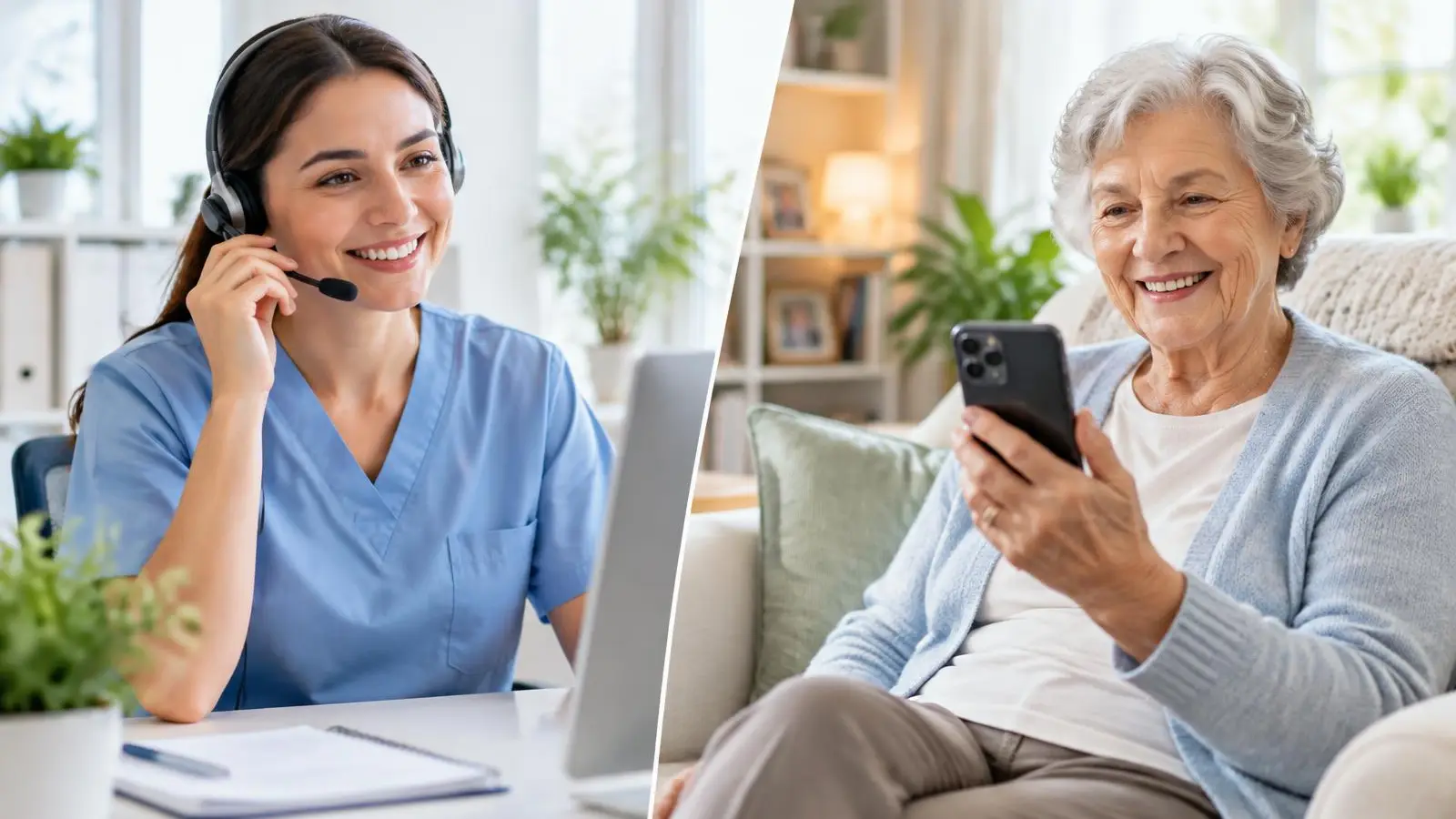
A lot happens between two home visits. A patient on oxygen who no longer knows how to set their concentrator. A worried carer who calls because "something isn't right". A nurse who would like a quick check-in, without crossing the county for a ten-minute visit.
Telecare makes it possible to keep that connection remotely. On one condition: the healthcare professional must be able to see their patient, not just hear them.
What is telecare?
In France, telecare (télésoin) is defined by the Public Health Code as a form of remote care using information and communication technologies. It connects a patient with one or more pharmacists or allied health professionals (nurses, physiotherapists, speech therapists…), within the scope of their competences.
It is the equivalent, for these professions, of teleconsultation for doctors. The activities concerned are specified by ministerial order, after an opinion from the French National Authority for Health (HAS).
Why telecare matters for home healthcare
Home healthcare providers and nurses support many patients, often elderly or living with chronic conditions, spread over a large area. For them, telecare meets three needs:
- more regular follow-up, without multiplying trips;
- a faster response when the patient or carer calls with a question;
- better-targeted visits: you travel when it is useful, knowing what awaits you on site.
The phone is not enough
On the phone, the healthcare professional depends on what the patient manages to describe. Yet an elderly, tired or worried patient struggles to describe a device, a dressing or their own condition. Photos sent afterwards arrive late, from the wrong angle, and not always in a secure setting.
The visual call: seeing the patient and their equipment during the call
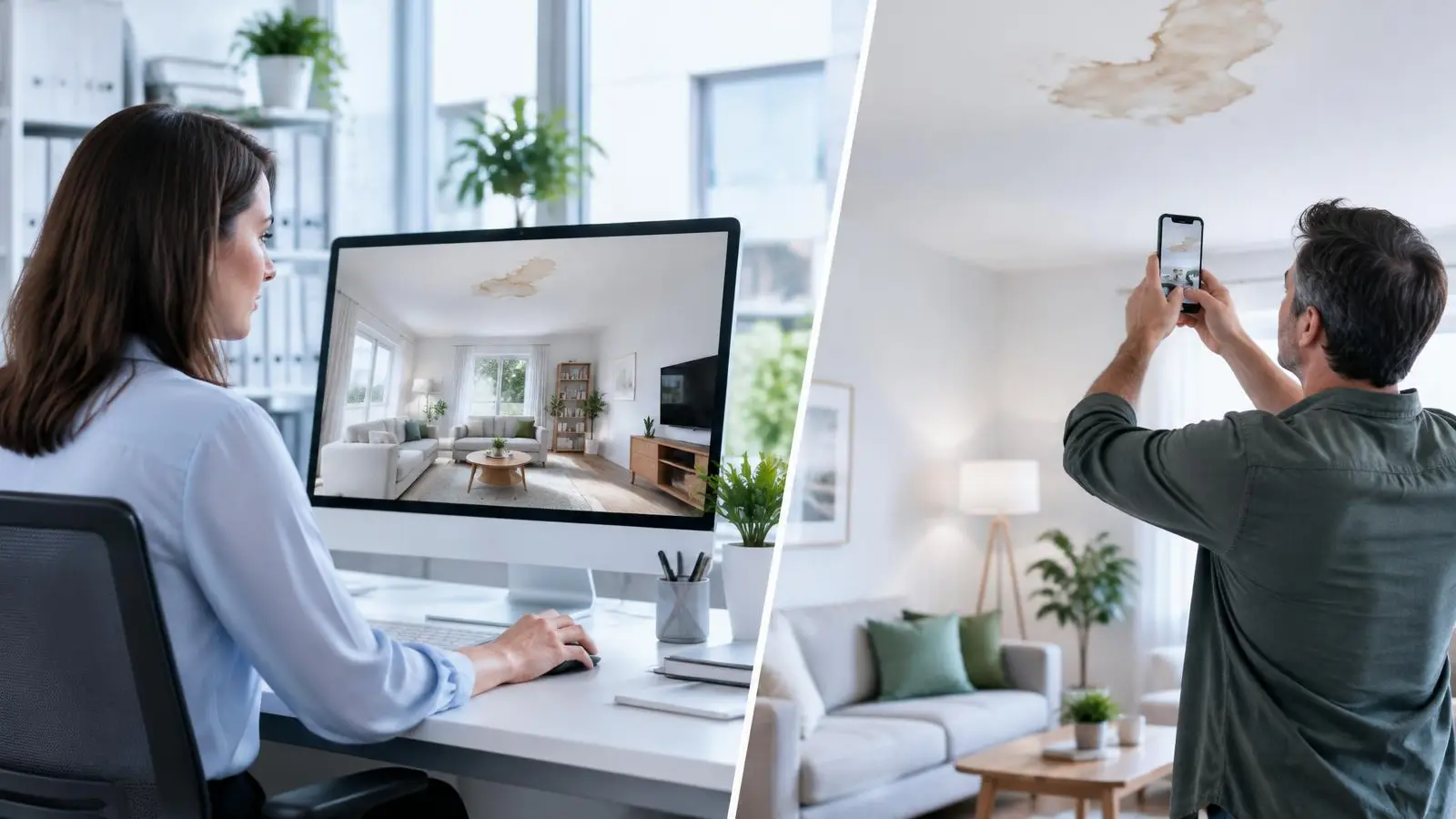
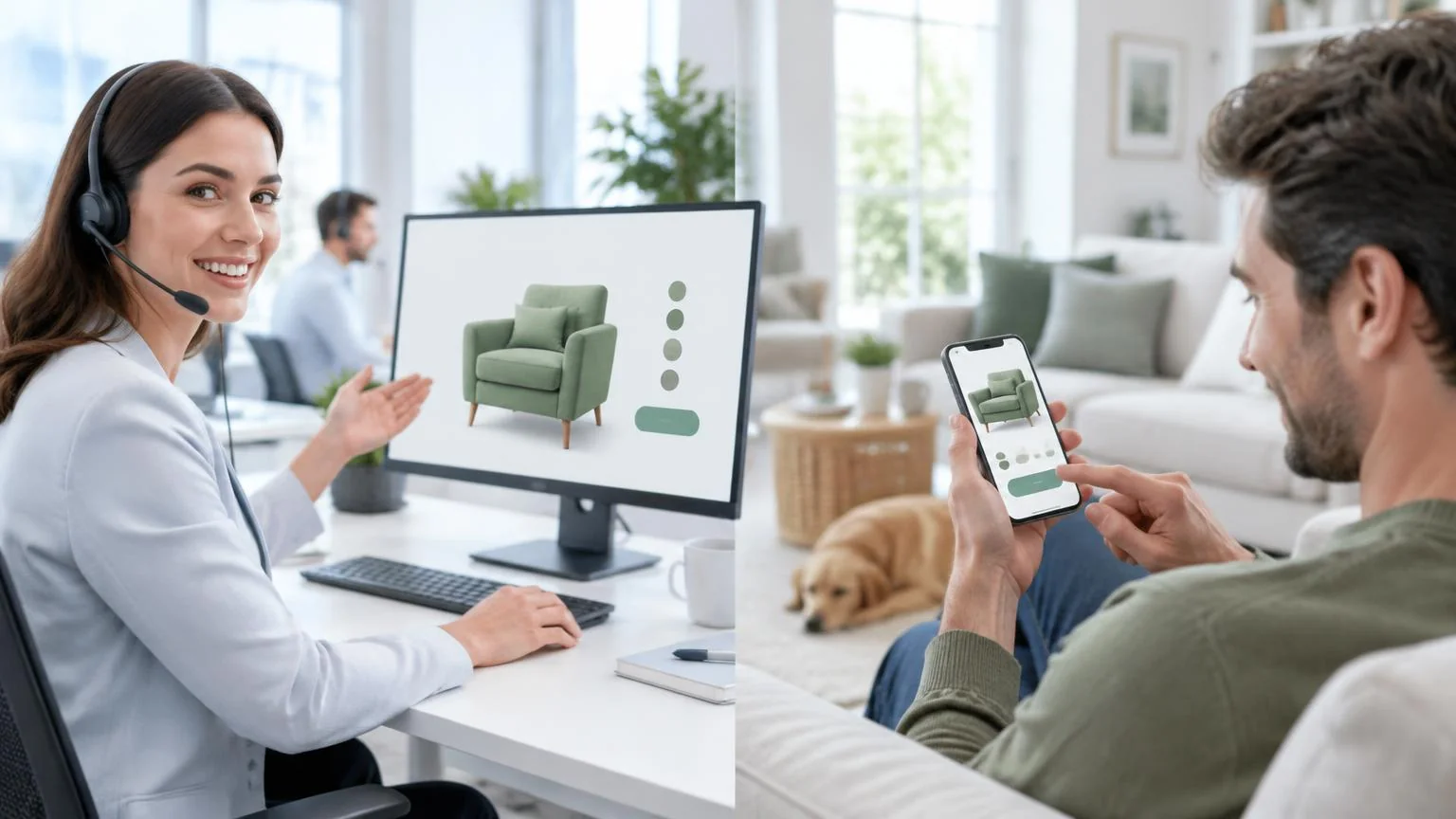
With the visual call, the healthcare professional adds the image to the call, without asking anything complicated of the patient:
- They send a link by SMS.
- The patient or carer taps it: the phone's camera opens in the browser, with no app to install and no account to create.
- The healthcare professional sees the device, the dressing, the posture, the surroundings, and guides step by step.
What teams use it for every day:
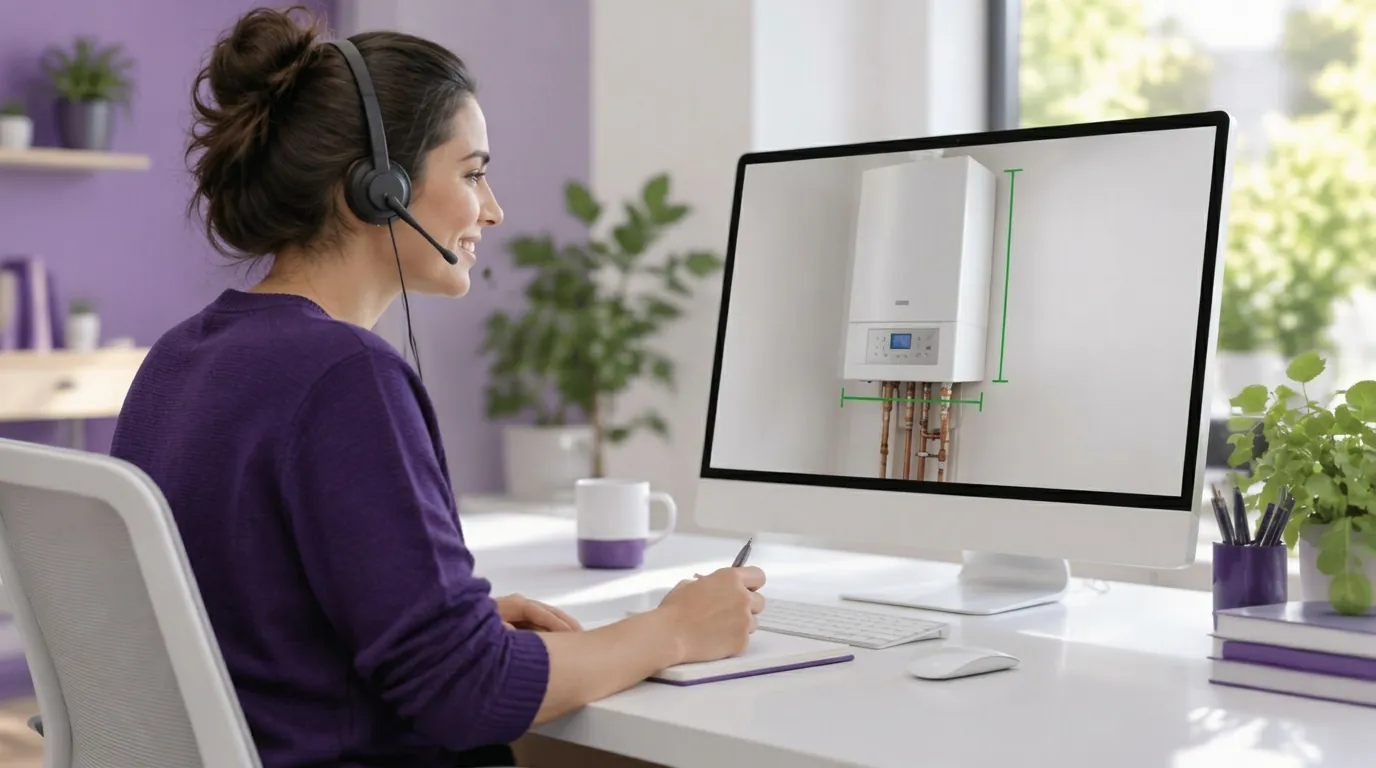
- guiding the setting or connection of a medical device (oxygen concentrator, CPAP, pump…);
- checking a procedure or an installation without travelling;
- reassuring a carer and deciding together what comes next: remote advice, a scheduled visit or a referral.
At Santé Cie, a major home healthcare provider supporting more than 500,000 patients, instant visual advice has strengthened the connection with patients. Read the Santé Cie case study
Measuring heart rate and respiratory rate during the call
For follow-up between two visits, seeing the patient is not always enough: vital signs matter too. Vizalia integrates Saphere, by e-sensia, which measures heart rate and respiratory rate using the phone's camera:
- In one click, the healthcare professional offers the measurement.
- The patient places their face in the oval and stays still for 30 seconds: at rest, seated, facing the light, phone placed 40-60 cm away.
- The healthcare professional receives the result a few seconds later. It is not displayed to the patient: it is reserved for the healthcare professional, and the interpretation remains theirs.
During the conversation, continuous monitoring also makes it possible to follow pulse and breathing as curves, for information only.
The measurement is performed by Saphere, by e-sensia, a class IIa medical device (CE 2460) for diagnostic support, under the supervision of a healthcare professional. Accuracy: heart rate ± 5 bpm, respiratory rate ± 4 /min (instructions for use v21, 2025). For adults aged 18 to 80, in teleconsultation and home monitoring. Do not use in life-threatening emergencies. Read the instructions for use carefully. Vizalia integrates Saphere and is not itself a medical device. Continuous monitoring provides indicative estimates, outside the scope of the medical device, and does not replace the certified measurement.
Health data security
A telecare session shows the inside of a home and a patient's state of health. Data hosting has to be up to the task: Vizalia is ISO 27001 certified and relies on HDS-certified hosting (French certification for health data hosts), in France. Learn more about our security
Setting up telecare in a home healthcare team
- Choose the priority situations: equipment settings, calls from carers, scheduled follow-up visits.
- Define when to offer the visual call and when a visit is still necessary.
- Train the teams: the tool takes a few minutes to learn; the real skill is guiding the patient well.
- Track a few indicators: trips avoided, response time to calls, regularity of follow-up, patient and carer satisfaction.
Frequently asked questions
Does the patient have to install an app? No. They tap the link received by SMS, and the camera opens in their phone's browser.
Does telecare replace home visits? No. It complements them: it allows more regular follow-up between two visits and helps decide when a trip is needed.
Does vital sign measurement work for all patients? It is intended for adults aged 18 to 80, at rest, and must not be used in life-threatening emergencies. The healthcare professional alone is responsible for the interpretation.
Further reading
- Video assistance (visio-assistance) for home healthcare providers
- Video assistance in healthcare: seeing to better care
- Video assistance (visio-assistance): definition, how it works and use cases
Want to see Vizalia in action? A 20-minute demo, on your own use cases. Request a demo →